

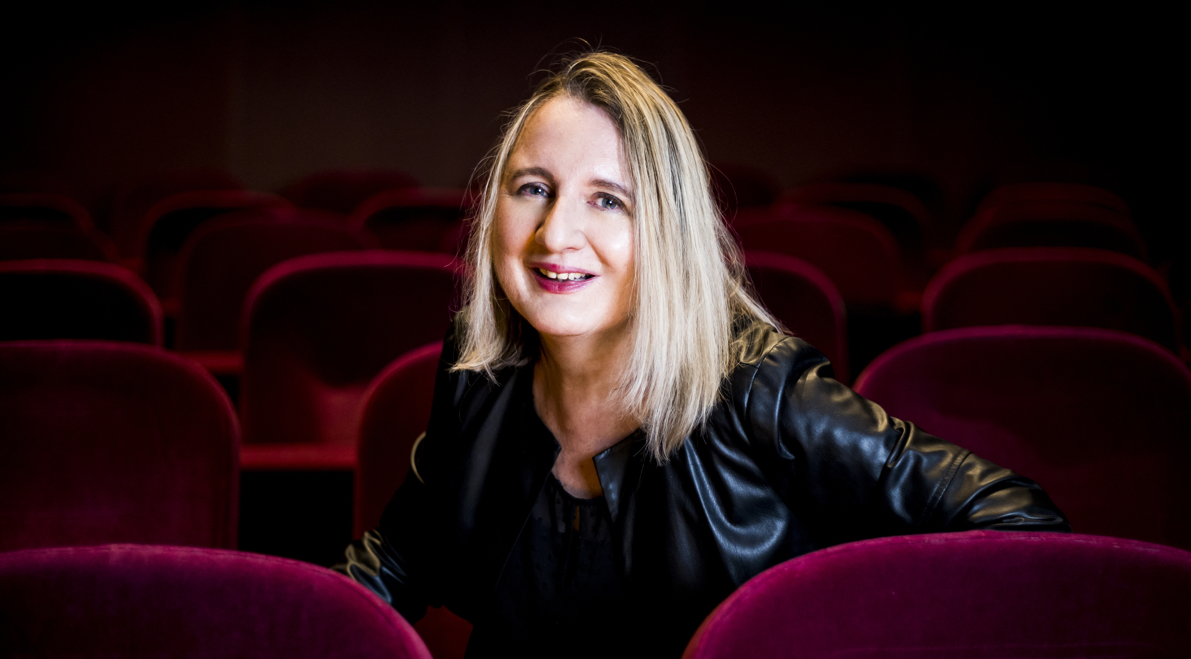
O Cinema em Portugal esteve à conversa com Nerina T. Kocjančič, directora da distribuição e promoção do SFC (Slovenian Film Centre), que, a seu convite, convergiu na criação da mostra Olhares da Eslovénia da 13.ª edição do Festival Olhares do Mediterrâneo, sendo que a própria encontra-se convicta de que o trabalho das realizadoras eslovenas merece uma atenção e um cuidado particulares.
A entrevista vai ser colocada no idioma em que foi realizada (Inglês), por forma a não perder nenhum tipo de sentido ou significado:
CEP: How did the invitation and collaboration between the Slovenian Film Centre (SFC) and the Olhares do Mediterrâneo – Women’s Film Festival come about?
Nerina: Five years ago, at the initiative of the Slovenian Ambassador in Portugal, we organized the first historical retrospective of Slovenian cinema at the Portuguese Cinematheque. The new ambassador also expressed a desire to host another Slovenian film event in Lisbon. I suggested a presentation of Slovenian female film directors, who have produced some of the freshest and most successful feature films in recent years. The Portuguese Cinematheque liked the idea and put us in touch with the Olhares do Mediterrâneo – Women’s Film Festival, with which they also collaborate as partners.
CEP: What was the selection process for the five feature films chosen for the “Slovenian Focus” programme?
Nerina: I proposed 11 films, mostly fiction, but also 4 documentaries. At the end the programmers decided for 5 films, 4 fiction and one documentary.
CEP: Beyond the “Slovenian Focus” programme, what are you most interested in watching or participating in at this year’s edition of Olhares do Mediterrâneo?
Nerina: I would like to follow the feature competition programme, but I will already leave, due to the fact it will start at the end of the week. I will try to catch some films from the short film competition programme. I will also participate at the round table about the role of National Film Institutes in the promotion of Women’s Cinema on Wednesday, November 25.
CEP: What do you believe should be the primary role of national audiovisual and film institutes in promoting and supporting films directed by women?
Nerina: Film institutes are caretakers of public funds, their responsibility goes beyond passive neutrality; they actively shape the cultural canon and industry pipeline. When historical funding models disproportionately favor established directors, institutes must intervene to correct market failures and ensure diverse storytelling.
Balanced Selection Committees: Ensure that the juries and boards deciding on grant recipients maintain strict gender parity and receive training on implicit bias.
Second-Feature Bridging: Many women directors successfully make a debut feature but struggle to secure financing for their second or third films. Institutes should create targeted “career continuity” funds to prevent mid-career drop-offs.
Caregiver Allowances: Include budget lines for childcare or dependent care during production and festival travel, removing practical barriers that disproportionately affect women filmmakers.
Public Data Tracking: Publish annual, transparent reports detailing the exact percentages of applications, approvals, and total euros awarded by gender, holding both the institute and the broader industry accountable.
CEP: Do you think that, in 2026, there are still sectors of the film industry that feel uncomfortable with the idea of a woman directing a film?
Nerina: Fortunately not anymore.


